Why does my house still feel dusty after cleaning? The hidden feedback loop you need to break
Your house feels dusty after cleaning not because your technique is flawed, but because your home’s internal environment is all driven by your HVAC system, humidity levels, and hidden pollutant sources, and it is creating a continuous “dust feedback loop” that surface cleaning alone cannot break. Addressing these systemic issues is the key to a lasting clean.
It’s a deeply frustrating experience. You spend hours on a deep cleaning, meticulously wiping every surface, vacuuming every corner, and for a fleeting moment, your home is pristine. But within a day, sometimes just hours, a fine layer of dust settles back onto your tables, shelves, and floors. Your house feels dusty again, and the time you spent cleaning feels wasted. You’re left wondering, why does my house accumulate so much dust so quickly? The problem, and the reason your house feels dirty after cleaning, is often invisible.
The common assumption is that the issue lies with our cleaning tools or technique. Maybe we need a better dusting spray, a more powerful vacuum cleaner like a Dyson, or a different cleaning order. While those factors play a role, they are rarely the root cause. The truth is that most homes operate with an unseen system that actively generates and circulates dust. This article will expose this “dust feedback loop” by exploring the three hidden pillars that contribute to it: the dust being actively manufactured inside your home, the role of your HVAC system as a particle super-spreader, and the science of how humidity makes dust stick. More importantly, we’ll show you how to break the cycle for good.
The ‘Dust Factory’ vs. The ‘Dust Symptom’: Uncovering Your Home’s Hidden Sources
The first step in solving the problem of rapid dust accumulation is to redefine what household dust actually is. We tend to think of it as outside dirt and grime tracked in on our shoes. While that’s a component, it’s a small one. The vast majority of dust is actually generated *inside* your home, turning it into a perpetual dust factory.
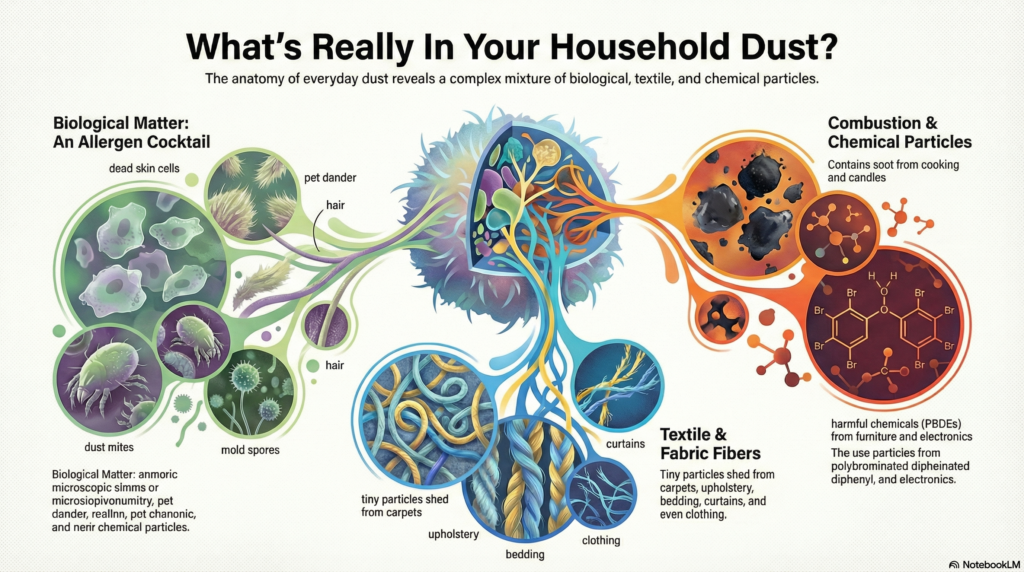
Think of the visible surface dust you clean as just the symptom. The true source of dust is a complex mixture of particles from various origins:
- Biological Matter: A significant portion of dust is made of dead skin cells shed by people and pets. Add in pet dander, pet hair, dust mites that feed on that skin, and airborne mold spores, and you have a potent cocktail of allergens.
- Textile and Fabric Fibers: Every soft surface in your home contributes to the dust load. This includes tiny carpet fibers from worn out carpet, particles from upholstery, bedding, window treatments like curtains, and even the clothes you wear.
- Combustion and Chemical Particles: Soot from cooking, burning candles, or a fireplace adds to the mix. Critically, many modern household items contribute unseen chemical particles. In fact, research shows that house dust can harbor potentially harmful chemicals like polybrominated diethyl ethers (PBDEs) from products like furniture and electronics. These particles off-gas into the air and eventually settle as dust.
When you focus only on wiping away this settled dust, you’re just managing the symptom. The “factory” is still running at full capacity, producing more particles every minute. This is why a new layer appears so quickly—it was already in the air, just waiting to settle.
Your Home’s Circulatory System: How Your HVAC Spreads More Dust Than It Catches
If your home is a dust factory, your HVAC system is the distribution network. A forced-air system acts like your home’s circulatory system, pulling air in, conditioning it, and pushing it back out through air vents. Unfortunately, without the right components, it does a better job of circulating airborne dust than it does of capturing it.
The Air Filter Problem
The primary line of defense in your HVAC system is the furnace filter. However, most standard filters are designed to protect the machinery, not your lungs. Many homeowners use cheap, fiberglass filters with a low MERV rating (Minimum Efficiency Reporting Value). These filters might catch large particles like pet hair, but they do very little to stop the fine particulate matter (PM2.5) that makes up much of the visible dust and poses the greatest health risk. These tiny particles pass right through dirty filters and are blasted back into your rooms, landing on the very surfaces you just cleaned. It’s critical to change HVAC filters on a regular schedule. Upgrading to a filter with a higher MERV rating (8-13 for most residential systems) or a specialized HEPA filter from a brand like Honeywell can make a significant difference in your indoor air quality (IAQ).
The Ductwork Dilemma
Over years of use, your air ducts and the connected ductwork can accumulate a shocking amount of dust, allergens, construction debris, and even mold spores. Every time your system turns on, it can dislodge these contaminants from the registers and propel them into your living space. You might dust a tabletop, and moments later, the heat or AC kicks on, depositing a fresh layer of fine particles from the air vents. This is a primary reason for that immediate “it feels dirty again” sensation. According to the EPA, you should consider having air ducts cleaned if particles are actually being released into the home from your supply registers. A professional duct cleaning service can help eliminate this hidden reservoir of grime.
The Science of Stickiness: Why Humidity Is Dust’s Best Friend
Ever wonder why dust seems to cling so stubbornly to some surfaces, making it impossible to truly remove? The answer often lies in your home’s humidity levels. The amount of moisture in your air dramatically affects how dust behaves.
- High Humidity (above 50%): When the air is too damp, it creates a perfect breeding ground for dust mites and mold, increasing the amount of biological allergens in your home. Moreover, moisture can make surfaces slightly tacky, causing dust to stick like glue instead of being easily wiped or vacuumed away. A dehumidifier can help bring these levels back into balance.
- Low Humidity (below 30%): Dry indoor air, common in winter, leads to a buildup of static electricity. This electrostatic charge turns your electronics, blinds, and even synthetic fabrics into dust magnets. It also causes airborne particles to repel each other and stay suspended in the air longer, only to settle after you’ve finished cleaning. A humidifier can add necessary moisture to the air, reducing static and allowing dust to be captured more easily.
Achieving a balanced humidity level, ideally between 40% and 50%, is crucial. It reduces the biological growth seen in damp conditions and minimizes the electrostatic charge of dry conditions, making your cleaning efforts far more effective.
A Nuanced Look at Cleaning vs. Environmental Control
Understanding the dust feedback loop requires a shift in perspective. To make the best decision for your home, it’s helpful to compare the approaches directly.Conventional Surface CleaningThis approach focuses on the visible symptoms of dust. It involves tools like a feather duster, vacuum cleaner, and microfiber cloths to remove settled dust from surfaces. It’s reactive, addressing the mess after it has already occurred. While it provides immediate aesthetic improvement, its effects are temporary because it doesn’t address the source or the distribution system. Worse, improper techniques (like dry dusting) or some cleaning products can make the problem worse. In fact, research shows that leaving cleaner residue on floors can make them feel sticky and act as a magnet for new dust and grime.Home’s Internal EnvironmentThis approach focuses on the root causes of dust. It involves managing the “dust factory” (textiles, biologicals), the “distribution network” (HVAC system and air filters), and the “science of stickiness” (humidity levels). It’s a proactive strategy aimed at reducing the creation and circulation of dust in the first place. The results are longer-lasting and contribute to a healthier indoor environment, but it requires a more holistic view and may involve an initial investment in tools like an air purifier or better filters.The ‘Dust Feedback Loop’This is the concept that connects the two. The internal environment creates dust, the HVAC system circulates it, and humidity makes it stick. Conventional cleaning temporarily removes what has settled, but the loop ensures it will be replaced quickly. Acknowledging this loop is the first step toward breaking it. It changes the goal from just “cleaning” to actively managing your home’s indoor air quality for a sustainable state of clean.
Breaking the Loop: A Proactive Strategy for a Truly Clean Home
Shifting from reactive wiping to proactive environmental control is the only way to achieve a lasting clean. Of course, there is a list of strategies you can employ, and here are the most effective ones to break the feedback loop.
1. Control Your Air
Your number one priority should be capturing airborne particles before they settle. This is far more efficient than trying to clean them up afterward. Start by upgrading your furnace filter to one with a MERV rating of at least 8. For superior filtration, invest in a portable High-Efficiency Particulate Air (HEPA) air purifier for key rooms like bedrooms and the main living area. Good ventilation is also key; opening windows can help flush out pollutants, but be mindful of outdoor pollen counts if you have allergies.
2. Optimize Your Cleaning Technique
Your cleaning methods matter. First, always follow the correct cleaning order: work from top to bottom. Dust high surfaces like ceiling fans, light fixtures, and window sills first, so any dislodged particles fall to the floor to be vacuumed up last. Ditch the feather duster, which just flings dust into the air, and switch to damp dusting with microfiber cloths. A quality HEPA vacuum is essential for trapping fine particles instead of exhausting them back into the room. For your vacuuming technique, use slow, overlapping passes to allow the machine time to lift debris from deep within carpets. Many people ask, what is the 20 minute rule in cleaning? After a thorough dusting, wait about 20 minutes for the airborne dust you’ve disturbed to settle before you vacuum. This simple pause answers the question of “how long does it take dust to settle after cleaning?” and ensures you capture a far greater amount of particulate.
3. Reduce the Sources
Systematically reduce what feeds the dust factory. A strict policy of removing shoes at the door, supported by good doormats, is one of the easiest and most effective changes. Tackle clutter; decluttering your home reduces the number of surfaces where dust can collect. Make a cleaning schedule that includes regularly washing bedding in hot water to kill dust mites and professionally cleaning upholstery or using a steam cleaner. Addressing issues like leaky windows can also help reduce the infiltration of outdoor pollutants.
Key Factors for Your Family’s Health and Home
This isn’t just about aesthetics; it’s about health. Scientific evidence from the EPA indicates that the air within homes can be more seriously polluted than the outdoor air in even the largest cities. Here’s why a systemic approach matters.The long-term health impact on family, children, and pets.Household dust is a vehicle for allergens that trigger asthma and allergies. More alarmingly, the fine particulate matter (PM2.5) in dust is a significant health concern. These tiny particles are so small that, when inhaled, they can bypass the lungs’ defenses and cross directly into the bloodstream, carrying toxins throughout the body. A proactive approach to reducing indoor air pollution is a direct investment in your family’s long-term health.The effectiveness of cleaning in solving the root cause versus just the symptom.Constantly wiping surfaces is like scooping water out of a boat with a hole in it. It’s exhausting and ultimately futile. By addressing the HVAC system, controlling humidity, and reducing sources, you are patching the hole. This makes your routine cleaning efforts far more effective and less frequent, saving you valuable time and energy.The ability of a service to identify and address systemic issues.When you need help, it’s important to choose the right kind. A standard service will make your home look clean. However, a health-focused professional cleaning service acts as a consultant for your indoor environment. They understand the science behind dust and use specialized cleaning products and methods that remove contaminants without leaving harmful residues. They can help you identify the specific sources contributing to your home’s dust problem.
Making the Right Choice for Your Needs
There is no single “best” solution; the right strategy depends on your primary concerns and goals. Based on your query and situation, here is how different people might approach the problem.
For the Health-Conscious Parent: Your focus is on minimizing your family’s exposure to unseen toxins and allergens. Prioritize upgrading your HVAC filter to the highest MERV rating your system can handle and placing a HEPA air purifier in your child’s bedroom and main living area. When choosing cleaning products, opt for non-toxic, fragrance-free options. A professional service that emphasizes toxicology and source control would be a valuable partner in creating a safe indoor environment.
For the Frustrated Homeowner: You are tired of the endless cycle of cleaning. Your biggest wins will come from breaking the dust feedback loop. Start with the two most impactful changes: upgrade your furnace filter and purchase a hygrometer to monitor and control your home’s humidity levels with a humidifier or dehumidifier. These two steps will dramatically slow the rapid dust accumulation that makes your hard work feel pointless.
For the Allergy/Asthma Sufferer: Your goal is the aggressive reduction of environmental triggers. A high-quality HEPA air purifier running 24/7 in the bedroom is non-negotiable. Your cleaning routine must be meticulous, with frequent damp dusting of all surfaces, including walls and ceilings, and vacuuming with a sealed-system HEPA vacuum. Encase pillows and mattresses in dust-mite-proof covers and prioritize washing bedding weekly in hot water. Consider a professional duct cleaning service to remove built-up allergens from your ductwork.
Ultimately, creating a home that doesn’t just look clean but feels clean and healthy requires a new approach. It means looking beyond the surface dust to the hidden systems that create it. By managing your home’s air, humidity, and dust sources, you can finally break the cycle and enjoy a cleaner, healthier space for your family. At Bella’s Mountain Vacation Cleaning, we specialize in a health-first approach that goes beyond surface cleaning. We understand the complex interplay of your home’s systems and how they impact your family’s well-being. If you’re ready to break the dust feedback loop for good and are located in the greater Lafayette, Colorado area, contact our team for a comprehensive consultation today.
RELATED : How often to schedule deep cleaning services in Lafayette for a truly healthy home
Standard vs deep clean: why the best choice is a strategic cycle
Beyond aesthetics: Why a professional deep cleaning is a critical investment for Boulder homes
What’s really included in a Boulder professional deep clean for a healthier home?
The 2026 Cleaning Consumer Guide